Blog
http//technolotal.org: Complete Guide to the Technology Platform, Features, Content, and Benefits (2026)

The keyword http//technolotal.org has attracted growing interest among internet users looking for technology news, digital resources, software insights, and educational content. Whether you discovered the website through a search engine or heard about it online, understanding its purpose and available resources can help you decide whether it meets your information needs.
In this detailed 2026 guide, we explore everything related to http//technolotal.org, including its purpose, content categories, possible features, user benefits, and how technology-focused websites help readers stay informed in today’s rapidly changing digital world. We also explain why platforms dedicated to technology education continue to gain popularity among students, professionals, entrepreneurs, and everyday internet users.
What Is http//technolotal.org?
http//technolotal.org refers to a technology-focused website or online platform associated with digital information, innovation, software, internet trends, and educational resources. Like many modern technology websites, it aims to provide readers with useful content that simplifies complex technical topics.
Technology websites have become essential learning resources because they help readers understand rapidly evolving subjects such as:
- Artificial Intelligence (AI)
- Cybersecurity
- Cloud Computing
- Software Applications
- Mobile Technology
- Digital Marketing
- Blockchain
- Web Development
- Consumer Electronics
- Emerging Tech Trends
By presenting information in a clear and organized format, platforms like technolotal.org can make technical knowledge more accessible to a broad audience.
Content Categories Available on Technolotal.org
One of the strengths of a technology-focused platform is its ability to cover multiple digital topics in one place. Readers often visit such websites to stay informed about innovations, tutorials, and industry developments.
Common content categories may include:
Technology News
Technology news keeps readers updated on:
- Product launches
- Industry announcements
- Software releases
- Artificial intelligence developments
- Consumer electronics
- Startup innovations
Software Guides
Many visitors search for practical tutorials covering:
- Installation guides
- Software reviews
- Productivity tools
- Troubleshooting tips
- Operating system updates
Cybersecurity
Online security remains one of today’s most important topics.
Articles may discuss:
- Password security
- Data privacy
- Malware protection
- Phishing prevention
- Secure browsing
- Digital safety practices
Internet and Digital Trends
Technology websites frequently explain:
- Social media updates
- Digital transformation
- Remote work tools
- Online collaboration
- E-commerce innovations
Why Technology Websites Matter in 2026
Technology evolves at an incredible pace. New software, hardware, and digital services appear almost every day, making it difficult for users to stay informed without reliable online resources.
Technology websites provide several important advantages:
- Current industry updates
- Easy-to-follow tutorials
- Product comparisons
- Educational articles
- Problem-solving guides
- Digital literacy resources
Students, professionals, business owners, and casual users all benefit from staying informed about emerging technologies.
As artificial intelligence, cloud services, and automation continue to reshape industries, educational technology platforms have become more valuable than ever.
Features Readers Often Look for on Technology Platforms
Successful technology websites generally focus on delivering useful, organized, and practical information.
Readers typically value features such as:
Comprehensive Tutorials
Step-by-step guides help beginners understand complicated technical processes without requiring advanced experience.
Honest Reviews
Product and software reviews help readers make informed purchasing decisions by comparing features, advantages, and limitations.
Educational Resources
Technology education includes:
- Programming basics
- Digital marketing
- Web development
- Networking concepts
- Computer maintenance
Regular Updates
Because technology changes quickly, readers appreciate websites that publish fresh content covering the latest trends and innovations.
Benefits of Using Technology Information Platforms
Learning through technology-focused websites offers numerous advantages.
Some of the most significant benefits include:
Improved Digital Skills
Educational articles help readers better understand software, hardware, and internet technologies.
Better Decision-Making
Detailed comparisons make selecting technology products and digital tools easier.
Professional Development
Keeping up with industry news helps professionals remain competitive in their careers.
Problem Solving
Many visitors search for troubleshooting guides that explain common software or hardware issues.
Increased Productivity
Learning about new digital tools can improve efficiency for businesses, students, and remote workers.
These benefits explain why technology education websites continue attracting millions of readers worldwide.
How to Evaluate Technology Websites
Not every technology website provides the same level of quality. Before relying on online information, readers should evaluate several important factors.
Look for:
- Accurate information
- Clear writing
- Well-organized articles
- Regular updates
- Transparent editorial practices
- Balanced explanations
- Useful tutorials
- Reliable references when appropriate
Quality content helps readers learn more effectively while reducing confusion.
A trustworthy platform also updates older articles to reflect changes in software, security practices, and industry standards.
Who Can Benefit from Technolotal.org?
A technology-focused website can serve a wide range of audiences.
Some of the people who may benefit include:
- Students learning computer science and information technology
- Business owners exploring digital solutions
- IT professionals seeking industry updates
- Software developers researching new technologies
- Digital marketers following online trends
- Remote workers using productivity tools
- General readers interested in technology news
Because technology influences nearly every industry, access to understandable educational content is increasingly important.
Conclusion
The keyword http//technolotal.org represents growing interest in online technology resources and educational content. Although the keyword appears in a non-standard URL format, technology platforms generally provide valuable information about artificial intelligence, cybersecurity, software, cloud computing, digital marketing, internet trends, and emerging innovations. As technology continues to transform everyday life in 2026, websites that prioritize clear explanations, practical tutorials, and informative articles remain valuable resources for students, professionals, businesses, and everyday internet users seeking to expand their digital knowledge.
Frequently Asked Questions
What is http//technolotal.org?
It refers to a technology-related website or keyword associated with digital information, technology articles, and educational resources. The keyword itself appears to use a non-standard URL format.
What type of content can readers expect?
Technology platforms often publish articles about software, cybersecurity, artificial intelligence, gadgets, internet trends, cloud computing, digital marketing, and productivity tools.
Who should visit technology websites?
Students, professionals, entrepreneurs, developers, educators, and anyone interested in modern technology can benefit from reading technology-focused articles.
Why are technology websites important in 2026?
Technology changes rapidly, and reliable educational resources help readers stay informed about innovations, software updates, security practices, and digital trends.
How can readers identify quality technology content?
Look for articles that are accurate, well-organized, regularly updated, easy to understand, and written with a clear educational purpose.

Cyanová is an unusual word that has attracted growing attention online in 2026. At first glance, it can look like the name of a newly invented color, a fashion brand, a surname, or a modern design concept. Its strongest documented meaning, however, is much more straightforward: cyanová is a Czech and Slovak adjective meaning “cyan-colored.”
The distinction matters because recent English-language articles sometimes present Cyanová as though it were a completely new color or a formally defined design movement. Current evidence does not establish that. Instead, Cyanová is closely connected to the established color cyan, while the accented spelling reflects its use in Czech and Slovak linguistic contexts.
Understanding Cyanová therefore requires looking at its language, relationship to cyan, color science, digital design, printing, branding, and the reasons the term has become more visible online during 2026.
What Does Cyanová Mean?
At its simplest, Cyanová means “cyan-colored” or “of a cyan color.” In Czech and Slovak, adjectives change form to agree grammatically with the nouns they describe. The ending “-ová” is used with feminine nouns, which explains expressions such as cyanová barva, meaning “cyan color” or “cyan-colored color.”
This is primarily a linguistic distinction rather than a new scientific color classification.
For an English-speaking reader, the accented final á can make Cyanová look like a proper name or specialized technical term. That appearance has contributed to online curiosity, particularly because the word is visually distinctive and resembles names used for brands, artistic projects, or design collections.
The most useful interpretation is therefore that Cyanová is a language-specific descriptive form associated with cyan. It should not automatically be treated as a separate color with a universally agreed international specification.
Cyanová and the Origin of the Word Cyan
The history of Cyanová begins with cyan, the underlying color term. The word cyan is historically connected with the ancient Greek kyanos, a term associated with dark blue and blue-colored materials. The modern scientific and color vocabulary developed much later.
Today, cyan is an established color concept used across digital displays, photography, graphic design, and commercial printing. In particular, cyan is one of the four process colors in CMYK printing, alongside magenta, yellow, and black.
It is important not to simplify this history by saying that “Cyanová is an ancient Greek word.” That would combine two separate linguistic developments. The historical Greek connection belongs to the root cyan, while Cyanová represents a later Czech and Slovak grammatical form.
This distinction helps explain why the word can sound historical while its most direct modern meaning remains relatively simple.
Is Cyanová a Separate Color From Cyan?
No universally standardized evidence currently establishes Cyanová as a separate international color category. It is better understood as a term referring to cyan or cyan-colored objects.
For digital work, the standard web color cyan is commonly represented by HEX #00FFFF, with RGB values of 0, 255, 255. Some sources also note that CSS uses “aqua” as an equivalent named color for this value.
However, it would be inaccurate to say that every color described as Cyanová must have exactly this numerical value.
A designer might use the word Cyanová to describe a broader blue-green palette, while a web developer or printer may require an exact color specification. Lighting, display technology, printing processes, paper, pigments, and surrounding colors can all affect how a blue-green color appears.
For precise work, the safest method is to specify an exact HEX, RGB, CMYK, HSL, Pantone, or other appropriate color value rather than relying solely on the name Cyanová.
Cyanová in Digital Design and Branding
The connection between Cyanová and modern design is understandable because cyan is highly visible in digital environments. Bright cyan can create a clean, energetic, futuristic appearance, making related shades useful in websites, applications, logos, interfaces, illustrations, and digital advertising.
Cyan can also work particularly well when combined with contrasting or complementary tones. Designers may pair blue-green shades with dark backgrounds to create strong visual separation, or combine softer cyan variations with neutral colors for a calmer appearance.
Recent online discussions have increasingly used Cyanová as a stylized design term, sometimes extending its meaning beyond a single color value to include an overall visual aesthetic.
That usage should be distinguished from the established linguistic meaning. A designer can choose “Cyanová” as the name of a palette, campaign, collection, or creative concept, but that does not make the name an internationally standardized design category.
Cyanová in Printing, Photography, and Digital Media
Cyan has a particularly important role in commercial printing because it is one of the four fundamental CMYK process colors.
In CMYK printing, cyan is combined with magenta, yellow, and black to reproduce a wide range of colors. This makes cyan fundamentally different from a purely decorative color name: it is part of an established technical color-production system.
In digital photography and displays, cyan also appears frequently because screens create colors through combinations of red, green, and blue light. Bright cyan is produced when green and blue light are strong relative to red.
For this reason, Cyanová-related design discussions often overlap with subjects such as digital graphics, photography, UI design, web development, and visual communication.
The practical lesson is simple: if exact reproduction matters, we should use numerical color specifications rather than assuming that the word Cyanová describes one fixed shade.
Why Is Cyanová Trending Online in 2026?
One notable feature of 2026 is the growing number of online articles specifically targeting the keyword Cyanová. Recent publications describe it in connection with color theory, design, branding, fashion, digital media, and creative aesthetics.
However, increased search visibility does not necessarily mean that Cyanová has suddenly become a universally recognized new color movement.
Some recent articles make broad claims about Cyanová as a design trend, while other sources take a more cautious view and emphasize its Czech and Slovak grammatical meaning.
The most defensible conclusion is that the term has become more visible in online content during 2026, particularly in articles about design and color. Whether it develops into a widely recognized English-language aesthetic term remains uncertain.
This distinction is useful because internet search popularity and formal linguistic or technical recognition are not the same thing.
How to Use Cyanová in Modern Design
Cyanová can be useful as a descriptive or creative term when the intended visual identity is based around cyan, blue-green, freshness, brightness, and digital aesthetics.
For web design, an exact color code should accompany the name. If pure web cyan is intended, #00FFFF provides a clear technical reference. If a softer, darker, or more muted blue-green is intended, the designer should specify the chosen value separately.
For branding, Cyanová can function as a creative name for a palette or visual identity. Its accented spelling gives it a distinctive appearance that can make a project feel different from one using the ordinary English word “cyan.”
For fashion and interiors, however, the same principle applies: the name alone does not communicate an exact shade. Materials and lighting can substantially change how a cyan or blue-green tone looks.
Cyanová vs. Turquoise, Teal, and Aqua
Cyanová is sometimes discussed alongside turquoise, teal, and aqua, but these terms should not automatically be treated as synonyms.
Cyan is generally understood as a bright blue-green color and has a formal role in digital and print color systems. Turquoise often has a somewhat greener or softer appearance, while teal generally refers to a darker and more muted blue-green. Aqua is also used as a name for the web color corresponding to #00FFFF.
The boundaries between these color names can become subjective in everyday language because people perceive shades differently and commercial products may use creative naming.
Therefore, Cyanová is best understood as a cyan-related linguistic or creative descriptor, rather than assuming that it always corresponds to turquoise, teal, or one exact digital color.
Frequently Asked Questions About Cyanová
What does Cyanová mean?
Cyanová means “cyan-colored” in Czech and Slovak usage. It is a feminine adjectival form associated with the color cyan.
Is Cyanová a real color?
Cyanová is a real color-related linguistic term, but there is no established evidence that it represents a separate internationally standardized color distinct from cyan.
What is the HEX code for Cyanová?
There is no universally standardized HEX value specifically assigned to Cyanová. When the intention is standard web cyan, the commonly used value is #00FFFF.
Is Cyanová the same as cyan?
In its Czech and Slovak linguistic use, Cyanová describes something as cyan-colored. In creative English-language usage, it can be used more broadly, so the precise intended shade should be confirmed.
Is Cyanová a new design trend?
Some 2026 online articles describe Cyanová as a design or aesthetic trend, but current evidence does not establish it as a formally recognized international design movement.
Where does the word cyan come from?
The word cyan is historically connected with the ancient Greek kyanos, associated with dark blue or blue-colored materials.
Can Cyanová be used for branding?
Yes. A business, designer, artist, or creative project can use Cyanová as a brand or palette name, provided the name is available and appropriate for the intended use. The name itself does not establish a standardized color specification.
Conclusion
Cyanová is best understood as a Czech and Slovak adjective meaning “cyan-colored,” rather than as a completely new color invented in 2026. Its connection to cyan places it within a well-established family of blue-green color terminology used in digital media, photography, graphic design, and printing.
The growing online interest in Cyanová has encouraged broader discussions about design, branding, fashion, digital aesthetics, and color psychology, but those modern interpretations should be distinguished from the term’s documented linguistic meaning.
For practical design work, the most important point is precision. Cyanová does not have one universally standardized HEX or RGB specification of its own. If a project requires exact color reproduction, we should define the actual numerical color value rather than relying only on the name.
In 2026, Cyanová is therefore most accurately described as a cyan-related Czech and Slovak linguistic form that has also become a distinctive creative term in online design discussions. Its future use in English-language branding and visual culture may continue to develop, but its established connection to cyan remains the clearest foundation for understanding the word.

Incfidelibus is an unusual term that has attracted attention online in 2026 because it looks remarkably similar to an authentic Latin word. At first glance, it may appear to be an ancient expression, religious phrase, philosophical concept, or historical term. However, the distinction between incfidelibus and the documented Latin form infidelibus is essential.
Current online references consistently describe incfidelibus as a non-standard spelling rather than an independently established Latin word. The closest recognized form is infidelibus, which is a grammatical form of the Latin adjective infidelis. Depending on context, that Latin word can relate to ideas such as unfaithful, faithless, disloyal, unreliable, or unbelieving.
At the same time, the Incfidelibus name has acquired a separate online history, including older material associated with phone-monitoring and hacking-related claims. Those internet references should not be confused with the linguistic history of infidelibus.
Understanding Incfidelibus therefore requires looking at its spelling, Latin connection, historical use, modern internet presence, and the difference between documented facts and speculation.
What Is Incfidelibus?
The simplest explanation is that incfidelibus is not established as a standard Latin word in its exact spelling. Instead, it closely resembles the genuine Latin form infidelibus, with an additional “c” inserted after “in.”
This one-letter difference is significant. Current sources examining the term explain that reliable Latin references support infidelibus, while the spelling incfidelibus does not have the same established grammatical status.
That does not mean the spelling incfidelibus has never been used. Unusual spellings can appear in digitized documents, OCR conversions, transcriptions, websites, usernames, online discussions, and deliberately created names.
The important distinction is between a term being searchable and a term being historically authentic. A word can appear thousands of times online without becoming an accepted Latin vocabulary item.
For that reason, when we encounter incfidelibus meaning searches, the more useful linguistic investigation is to examine the related word infidelibus.
Incfidelibus vs. Infidelibus: The Important Spelling Difference
The closest established Latin form is infidelibus.
It comes from infidelis, a Latin adjective associated with concepts such as unfaithful, faithless, disloyal, or unreliable. In later religious contexts, the word family could also refer to people characterized as unbelieving or lacking faith.
Infidelibus is an inflected grammatical form, meaning its exact English translation depends on the sentence in which it occurs. Latin uses grammatical cases to communicate relationships between words, whereas modern English generally relies more heavily on word order and prepositions.
Consequently, possible translations can include ideas such as:
- to the unfaithful
- for the faithless
- with the disloyal
- by the unfaithful
- for or to the unbelieving
These should not be treated as one fixed translation. The surrounding Latin sentence is necessary to determine the precise meaning.
This is why simply translating incfidelibus as though it were a standard Latin word can create confusion. The spelling itself is uncertain, while the related form infidelibus has a documented linguistic foundation.
What Does Infidelibus Mean in Latin?
To understand incfidelibus, it helps to examine the genuine Latin word behind the confusion.
The root fidelis generally relates to being faithful, loyal, trustworthy, or dependable. Adding the negative prefix produces infidelis, which can describe something or someone as unfaithful, faithless, disloyal, or not trustworthy.
The meaning can change with context. In ordinary or classical usage, it could relate to loyalty or trustworthiness. In later religious writing, the same word family acquired associations with unbelief or people regarded as lacking faith.
The plural form infidelibus is therefore not simply a standalone English-equivalent word. Its grammatical role matters.
This distinction is especially important when interpreting historical documents. A translator should examine the entire sentence rather than taking an isolated Latin word and assigning it one universal English definition.
Where Did the Extra “C” in Incfidelibus Come From?
The exact origin of the spelling incfidelibus has not been firmly established.
Several explanations are possible. It could be a typing mistake, transcription error, OCR error, copied spelling, or modern online variation. Some sources specifically suggest that a copying or digitization error may have allowed the unusual spelling to spread online.
OCR, or optical character recognition, is particularly relevant when old printed material is converted into searchable digital text. Software can occasionally misread characters, and an incorrect spelling can then be copied by later websites.
However, we should not state one particular origin as proven unless an original document or reliable historical record establishes it.
The safest conclusion is that the “c” has no recognized grammatical role in the standard Latin form and that the unusual spelling is most likely a non-standard variation rather than a separate classical word.
Incfidelibus and Its Online History
There is another reason people search for Incfidelibus in 2026: the name has a separate online history unrelated to Latin.
Historical web material has associated the IncFidelibus name with phone-monitoring and hacking-related services or claims. Current sources discussing that history emphasize the importance of separating those internet references from the linguistic question.
This distinction matters because searching the same keyword can lead people to two completely different subjects.
One person may have encountered incfidelibus in a supposedly Latin text and want a translation. Another may have seen the name on an old website or in an online discussion about monitoring services.
Those are not necessarily the same thing.
There is also no reliable basis for assuming that every website currently using the name is connected to the historical services. Online domains can change ownership, expire, be repurposed, or be relaunched, so a shared domain name does not automatically prove continuity.
What Is Incfidelibus.com in 2026?
Current online reporting indicates that incfidelibus.com has a general informational publishing presence in 2026, with content covering subjects such as technology, education, websites, and other digital topics.
This current presentation differs substantially from the historical online material associated with hacking and monitoring claims.
That difference is important when researching the domain. We should not automatically conclude that the present website and historical service have the same operators simply because they use the same name or domain.
Without reliable ownership records establishing continuity, it is more accurate to say that the domain has a historical online footprint and a current informational presence, while the relationship between those periods remains unconfirmed.
For anyone visiting an unfamiliar website, ordinary online safety principles remain useful: check the domain, avoid providing unnecessary sensitive information, and be cautious about unsolicited requests for passwords, payment, verification codes, or account access.
How to Understand Incfidelibus Correctly in 2026
The best way to research incfidelibus is to separate three different questions.
First, there is the linguistic question. In this context, the spelling is best treated as a non-standard form resembling infidelibus, the recognized Latin word related to infidelis.
Second, there is the historical internet question. The IncFidelibus name has appeared in online material connected with monitoring and hacking-related claims. Those claims should be treated separately from the Latin interpretation.
Third, there is the current website question. The present incfidelibus.com site appears to function as a general informational publication, but current website activity should not automatically be attributed to historical operators.
Keeping these three areas separate produces a much clearer picture.
Frequently Asked Questions About Incfidelibus
What does Incfidelibus mean?
Incfidelibus does not have a firmly established independent meaning as a standard Latin word. It closely resembles infidelibus, a genuine Latin grammatical form associated with infidelis.
Is Incfidelibus a real Latin word?
The exact spelling incfidelibus is not established as a standard Latin form in the sources reviewed. The recognized form is infidelibus, without the extra “c.”
What does Infidelibus mean?
Depending on its grammatical context, infidelibus can convey meanings related to the unfaithful, faithless, disloyal, unreliable, or unbelieving. A complete Latin sentence is needed for an exact translation.
Why does Incfidelibus look like Latin?
Its spelling closely resembles the genuine Latin form infidelibus. The similarity makes it look authentically Latin even though the additional “c” is not part of the standard form.
Is Incfidelibus an ancient philosophical concept?
There is no reliable evidence establishing incfidelibus as a distinct ancient philosophical concept. Claims assigning it a separate historical philosophy should therefore be treated cautiously.
Is Incfidelibus connected with hacking?
The Incfidelibus name has a historical online association with hacking and phone-monitoring-related claims, but that is separate from the Latin word infidelibus.
Is Incfidelibus.com a hacking website today?
Current reporting describes the visible incfidelibus.com presence as a general informational website rather than the type of service associated with historical material. This does not by itself establish whether current and historical operators are connected.
Can searching for Incfidelibus harm a computer?
Searching for a word is not inherently dangerous. The normal risks come from interacting with malicious links, downloads, forms, or requests for sensitive information, not from the word itself.
Conclusion
Incfidelibus is best understood as a non-standard spelling closely resembling the genuine Latin form infidelibus. The established Latin word comes from infidelis and can relate to ideas of unfaithfulness, disloyalty, faithlessness, unreliability, or unbelief depending on historical and grammatical context.
The unusual “c” in incfidelibus does not have a recognized grammatical function, and its precise origin remains uncertain. A transcription mistake, OCR error, copying error, or modern online usage are all possible explanations, but none should be presented as proven without stronger evidence.
At the same time, Incfidelibus has a separate internet history involving older hacking and phone-monitoring-related claims. Current online material describes incfidelibus.com differently, as a general informational website, and there is insufficient evidence to assume that current operators are necessarily connected with historical users of the name.
For anyone searching incfidelibus in 2026, the clearest approach is therefore to separate its Latin connection, spelling history, online history, and current website presence rather than treating all references as one story.
Blog
BrumeBlog.com: Complete Guide to the Website, Content, Categories, and What Readers Should Know in 2026
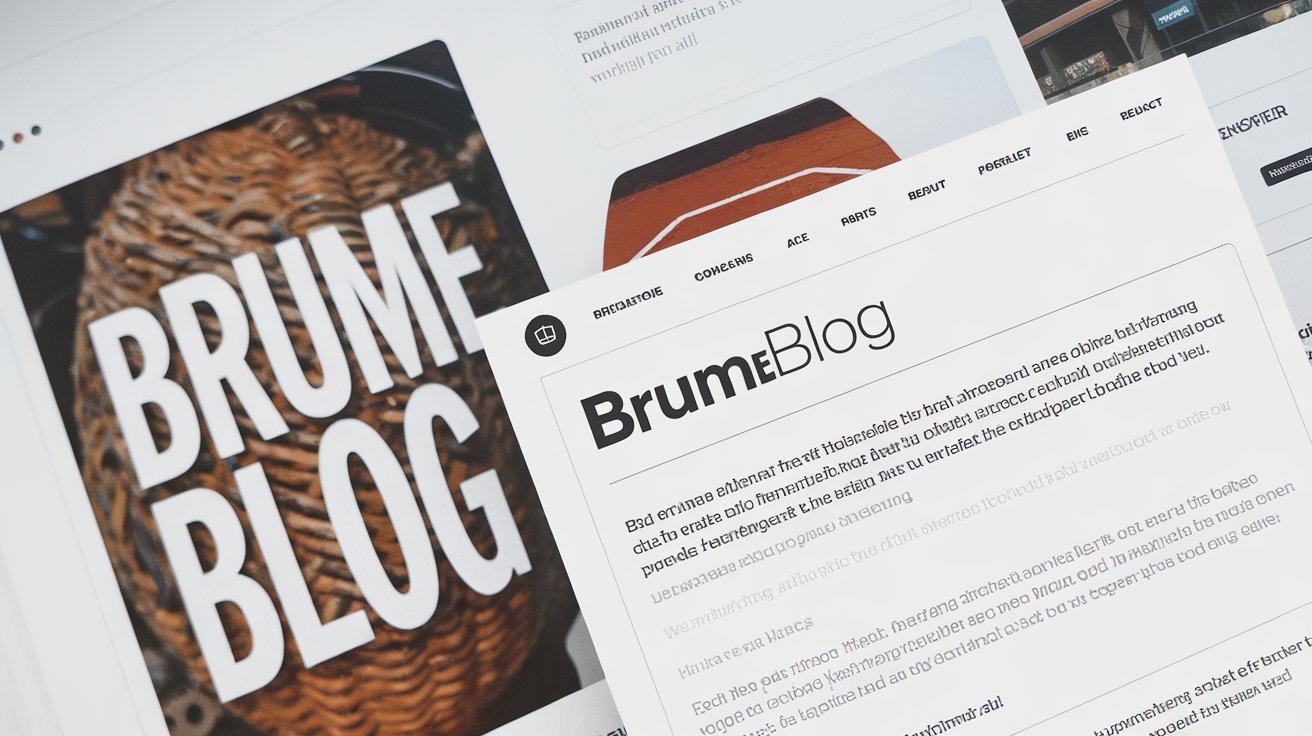
BrumeBlog.com is a multi-topic online publishing website that has become increasingly visible in search results during 2026. Rather than concentrating on one specialist subject, the website publishes articles across areas such as business, education, finance, health, lifestyle, technology, travel, real estate, artificial intelligence, fashion, pets, gaming, and other general-interest subjects. The site’s own description characterizes BrumeBlog.com as offering magazine-style content across topics including fashion, lifestyle, entertainment, technology, business, and sports.
The current homepage also shows that the site is actively publishing. Recent September 2026 articles have covered private real-estate financing, aging in place, senior care, home renovation, back pain, and other practical subjects.
Understanding brumeblog com therefore requires more than looking at the name. We need to consider what the website publishes, how its content is organized, who may find it useful, and how readers should evaluate information when articles cover subjects that require specialist expertise.
What Is BrumeBlog.com?
BrumeBlog.com is a general-interest, multi-topic content and publishing website. Its purpose is not limited to one niche such as technology, finance, travel, or lifestyle. Instead, it brings numerous categories together under one digital publication.
The site’s public structure includes articles, categories, author information, publication dates, and navigation that allows visitors to explore different subjects. Recent independent descriptions similarly characterize BrumeBlog.com as a broad digital magazine rather than a specialist publication.
This structure can be useful for readers who frequently research unrelated subjects. Someone might visit the website to learn about a technology topic and later discover articles about business, education, travel, health, or home-related subjects.
The important distinction is that BrumeBlog.com should be understood as a general information source rather than automatically as an expert authority in every category it covers.
What Topics Does BrumeBlog.com Cover?
One of the defining characteristics of BrumeBlog com is its broad subject range. Current descriptions identify major areas including business, education, finance, health, lifestyle, technology, and travel, with additional subjects such as artificial intelligence, law, real estate, fashion, pets, crypto, trading, games, and websites also appearing in the site’s wider content structure.
The website’s recent publishing activity demonstrates how wide this editorial approach can be. In September 2026, the homepage included content about private real-estate financing, aging in place, senior care, home renovation, and persistent pain.
This means visitors may encounter several different article formats, including:
- Informational explainers
- Practical guides
- Business articles
- Technology and AI discussions
- Finance-related content
- Lifestyle articles
- Health and wellness information
- Travel-related material
- Home and real-estate topics
- Articles about websites and digital platforms
Because the subject matter changes significantly from page to page, each article should be considered according to its topic, publication date, author, evidence, and intended purpose.
How BrumeBlog.com Works as a General Publishing Platform
BrumeBlog.com follows a familiar digital publishing model. Readers can access articles online, browse different subjects, and move between pieces of content through categories and other site navigation.
The general-interest model has an obvious advantage: it creates a single place where readers can explore many subjects. Instead of visiting a separate specialist blog for every basic question, a reader can use a broad publication to gain introductory information and discover topics worth researching further.
The website’s own description says its goal is to provide readers with a wide variety of magazine-style material and an enjoyable reading experience.
At the same time, breadth creates an important limitation. A publication covering dozens of categories cannot automatically be assumed to have the same level of specialist expertise in medicine, law, finance, technology, or other technical fields.
For that reason, BrumeBlog.com can serve as a starting point for research, while important decisions may require confirmation through authoritative or primary sources.
Is BrumeBlog.com Active in 2026?
Yes. The public homepage currently shows recently published material dated September 2026, demonstrating that BrumeBlog.com is not simply an abandoned archive. Among the recent posts are articles dated September 12 and September 15, 2026.
The recent publishing activity covers several unrelated subjects. For example, one September article discusses private financing for real-estate investors, while other recent pieces examine aging in place, senior care, home renovation, and health-related subjects.
An article published on September 9, 2026, also discusses SoSoActive, illustrating how BrumeBlog.com publishes explanatory pieces about other online platforms and digital properties.
However, recent publishing activity alone does not establish editorial quality or specialist authority. It simply demonstrates that new content is being added to the public website.
Who Can Use BrumeBlog.com?
BrumeBlog.com is primarily suited to general readers looking for accessible information across multiple subjects.
A visitor may find the site useful when trying to:
- Understand an unfamiliar term
- Explore a business concept
- Learn introductory technology information
- Research lifestyle or travel topics
- Read about finance and entrepreneurship
- Discover information about websites and digital trends
- Find general background information before conducting deeper research
The broad structure also makes the site potentially useful for students, professionals, entrepreneurs, online readers, and people researching everyday questions.
The best use depends on the subject. For a general-interest question, a readable introductory article can provide useful context. For a medical diagnosis, legal dispute, major investment decision, or other high-stakes issue, readers should seek information from appropriately qualified or authoritative sources as well.
How Should We Evaluate Information on BrumeBlog.com?
When using any multi-topic publishing website, including BrumeBlog.com, it is useful to evaluate individual articles rather than assuming that the entire website has one uniform level of authority.
We can begin by checking the publication date. This is particularly important for rapidly changing subjects such as artificial intelligence, software, financial markets, regulations, products, and online services.
Next, we can examine the author information and determine whether the article provides supporting evidence or links to authoritative sources.
We should also distinguish between an introductory explanation and professional advice. An article about a financial concept can explain terminology without being suitable as personalized investment advice. Similarly, a general health article can provide background information without replacing consultation with a qualified medical professional.
Independent coverage of BrumeBlog.com has also emphasized that readers should evaluate individual articles based on their subject, authorship, specificity, and supporting information rather than treating the website as a specialist authority in every field.
BrumeBlog.com and Similar Website Names
One issue worth remembering when searching for brumeblog com is that similar names and domains can appear online.
For example, brume-blog.com is a different web address from brumeblog.com. Public research has identified different content collections associated with the two addresses, and there is not enough evidence to automatically treat them as the same website or organization.
This is a useful lesson for online research generally. A similar domain name does not prove common ownership, shared editorial operations, or an official relationship.
When researching BrumeBlog, readers should therefore verify the exact spelling:
brumeblog.com
rather than relying solely on a similar-looking search result.
Frequently Asked Questions About BrumeBlog.com
What is BrumeBlog.com?
BrumeBlog.com is a multi-topic digital publishing website covering areas such as business, education, finance, health, lifestyle, technology, travel, and additional subjects.
What topics does BrumeBlog.com cover?
The site covers a broad range of subjects, including business, finance, education, technology, health, lifestyle, travel, AI, real estate, law, fashion, pets, gaming, crypto, and trading.
Is BrumeBlog.com active in 2026?
Yes. Its homepage currently displays multiple articles published in September 2026, including material about real estate, senior care, home improvement, and health-related subjects.
Is BrumeBlog.com a technology website?
Not exclusively. Technology is one of its content areas, but the website operates as a general-interest publication covering numerous categories.
Is BrumeBlog.com free to read?
Public articles on the website can be accessed directly through the site without a visible mandatory reader subscription for ordinary browsing.
Can BrumeBlog.com replace professional advice?
No general-interest article should automatically be treated as personalized professional advice. For important medical, legal, financial, or safety-related decisions, readers should verify information through current authoritative sources or an appropriately qualified professional.
Is BrumeBlog.com the same as brume-blog.com?
No assumption should be made based only on similar names. They are different domain addresses, and available evidence does not establish that they are the same website or organization.
Conclusion
BrumeBlog.com is a broad, multi-topic online publishing platform active in 2026. Its content spans business, finance, education, technology, health, lifestyle, travel, and numerous additional categories, making it more comparable to a general-interest digital magazine than a narrowly focused specialist website.
The website is currently publishing new material, with September 2026 articles covering subjects ranging from real-estate financing to aging in place, senior care, home renovation, and health-related topics.
For readers researching brumeblog com, the most important approach is to examine the exact domain and evaluate each article according to its date, author, evidence, subject, and purpose. The site’s wide range can make it useful for discovering information and gaining introductory context, while specialized or high-stakes questions should be checked against authoritative sources.
Ultimately, BrumeBlog.com is best understood as a general digital content destination for readers exploring many different subjects in one place.

Onna Sicuranza: Meaning, Background, Name Origins, and What We Know in 2026

Babeltee: Meaning, Uses, Tea Connection, Fashion Context, and What to Know in 2026

Cyanová: Meaning, Origin, Color, Uses, and What It Means in 2026

Lucas’s or Lucas’: Which Possessive Form Is Correct? Grammar Rules, Examples, and Common Mistakes

Minecraft PlayBattleSquare: What It Is, How to Play, Features, and Complete Guide

Dallas Yocum: Biography, Career, Personal Life, and Everything You Need to Know
 Business2 months ago
Lucas’s or Lucas’: Which Possessive Form Is Correct? Grammar Rules, Examples, and Common Mistakes
- Entertainment2 months ago
Minecraft PlayBattleSquare: What It Is, How to Play, Features, and Complete Guide
- celebrity3 months ago
Dallas Yocum: Biography, Career, Personal Life, and Everything You Need to Know
- Entertainment2 months ago
TB Meaning Text: What Does TB Mean in Text Messages, Chat, and Social Media?
- Entertainment3 months ago
Start@ThriftyEvents.net: Your Complete Guide to Affordable Event Planning and Memorable Celebrations
- celebrity3 months ago
Kelsy Ully: Biography, Career, Marriage, Divorce, Net Worth, and Life Beyond the Spotlight
- Entertainment3 months ago
Get ThriftyEvents.net Blog: The Complete Guide to Affordable Event Planning and Memorable Celebrations
- celebrity3 months ago
Robin Stapler: Biography, Career, Personal Life, and Relationship History